Steamy Local Landmark

Club member Tristan Leverett reports:

A rather nice little local landmark for steam enthusiasts within the Thames Valley is a little known and fairly hidden piece of history. Now don’t get too excited, its not some rusty old engine lying in a back garden with free to good home sign on it, but actually a lovely old cast iron sign!

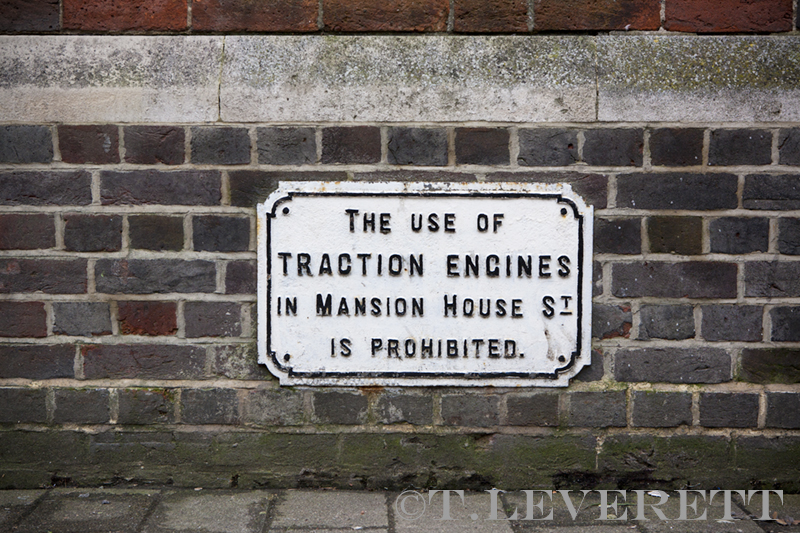
At the bottom Northbrook Street in Newbury is a road called Mansion House Street, on its corner a rather imposing Victorian brick Town Hall building stands complete with cast GR red post box built into its walls, it also hosts an easily ignorable sign designed for the eyes of traction engine drivers passing through the town.

Cast Iron sign advising Traction Engine drivers where not to drive in Historic Market Town Newbury.

Cast Iron sign advising Traction Engine drivers where not to drive in Historic Market Town Newbury.

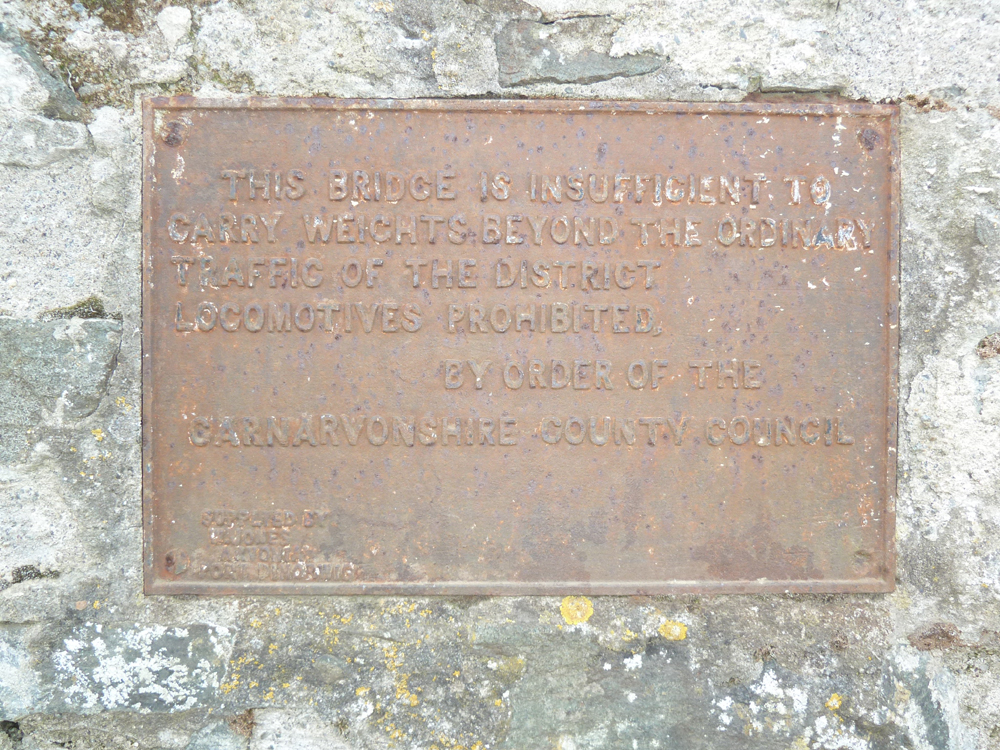
Like the cast iron sign on Henley Bridge heeding a warning to engine drivers to only take one load at a time, people must walk past it everyday and probably never read it. But next time you’re that way why not pay a visit to the sign and take a moment to think what it was like back a 100 years when the busy streets of Newbury weren’t cluttered up with generic chain stores, ugly buses but shops with painted signs and gold leaf frontages, traction engines and steam wagons feeding this old market town, picking up loads from the narrow boats on the Kennet and of course avoiding Mansion House Street and the invariable bobby that would have been there waiting ready with his book and pencil the minute he heard a barking engine on the approach!


Posted in Historical | 1 Comment

Weights and road speeds of model engines

Member Trevor Clay who owns Burrell 3″ scale traction engine “Bill” provides some interesting information on weights and speeds:

Comparing scale weights and speeds of miniatures against full size weights and speeds

I have often wondered about how hard miniature engines have to work when being driven around rally fields, lanes, hills etc so I have tried to establish the scaled up speeds and towed weights that are typical of miniature traction engines.
I have made some tables that should provide an understanding of the relationship between the different scales and a full size engine.

For example:-  Quite often, when I am giving rides, I have got a typical towed weight of 750lbs behind my 3” Burrell.  This is made up by the following:-  2 trailers (total weight 150lbs), myself (200lbs) and a load consisting of 2 adults (200lbs each) or 4 children (100lbs each) , and can be pulled over soft wet grass at a speed of 2 to 2.5 mph.  Tarmac is better as a speed of up to 3.5 mph is possible with ease whilst on the flat.  These weights are approximate and can easily be exceeded.  This equates to just over 21 tons and with a speed for a full size engine equating to 8 to 10 mph on grass or 14 mph on tarmac.

Some more comparisons

If you take a 2” engine and assume it is on tarmac or dry hard ground. With a speed of 1 to 1.5mph and a typical load of 200lbs to 250lbs this equates to 6 to 9mph with a load of 19.3 to 24.1 tons with a full size engine.

  • A 3” engine’s driver and driving trolley weighs typically about 275lbs or 7.9 tons if scaled up.
  • A 4.5” engine’s driver and driving trolley weighs typically about 275lbs or 2.3 tons if scaled up.

Below are two tables that give examples of various weights and scales.

Table showing:- Scale weight to true weight.

Scale Scale Weight (lbs) Conversion Factor Scaled up Weight (lbs) Weight (tons)
 (“/ft)
1 500 1728 864000 385.7
2 500 216 108000 48.2
3 500 64 32000 14.3
4 500 27 13500 6.03
4.5 500 19 9481 4.23
5 500 14 6912 3.09
6 500 8 4000 1.79

Table showing:- True weight to scale weight.

Scale True Weight (tons) Conversion Factor Scale Weight (as lbs) Scale Weight (as tons)
(“/ft)
1 10 1728 13 0.01
2 10 216 104 0.05
3 10 64 350 0.16
4 10 27 830 0.37
4.5 10 19 1181 0.53
5 10 14 1620 0.72
6 10 8 2800 1.25

It looks like the smaller scale engines are most likely to be worked hardest, even if the driver only is being pulled.  I have heard about a 1” Minnie pulling a car back in the 1950/60s and that equated to a lot of weight if you scale it up.

With the speed, it is very simple to convert from scale speed to the equivalent speed of a full engine,  you just multiply by the speed of the model by it’s scale, ie

  • 1” scale you multiply by 12
  • 2” scale you multiply by 6
  • 3” scale you multiply by 4
  • 4” scale you multiply by 3
  • 4.5” scale you multiply by 2.67

Table showing actual road speed to scale speed.

Road speed (mph) scale “/foot
1” 2” 3” 4” 4.5” 5” 6”
1 12 6 4 3 2.67 2.4 2
2 24 12 8 6 5.33 4.8 4
3 36 18 12 9 8 7.2 6
4 48 24 16 12 10.67 9.6 8
5 60 30 20 15 13.33 12 10
6 72 36 24 18 16 14.4 12
7 84 42 28 21 18.67 16.8 14
8 96 48 32 24 21.33 19.2 16
9 108 54 36 27 24 21.6 18
10 120 60 40 30 26.67 24 20

I have used an excel spreadsheet to convert scale weights or speeds to and from true weights or speeds and this could be available via email. If you would like a copy then contact alittleandoften@gmail.com.
Posted in model steam, Technical topics | Tagged , | Leave a comment

Veteran roller back on the job

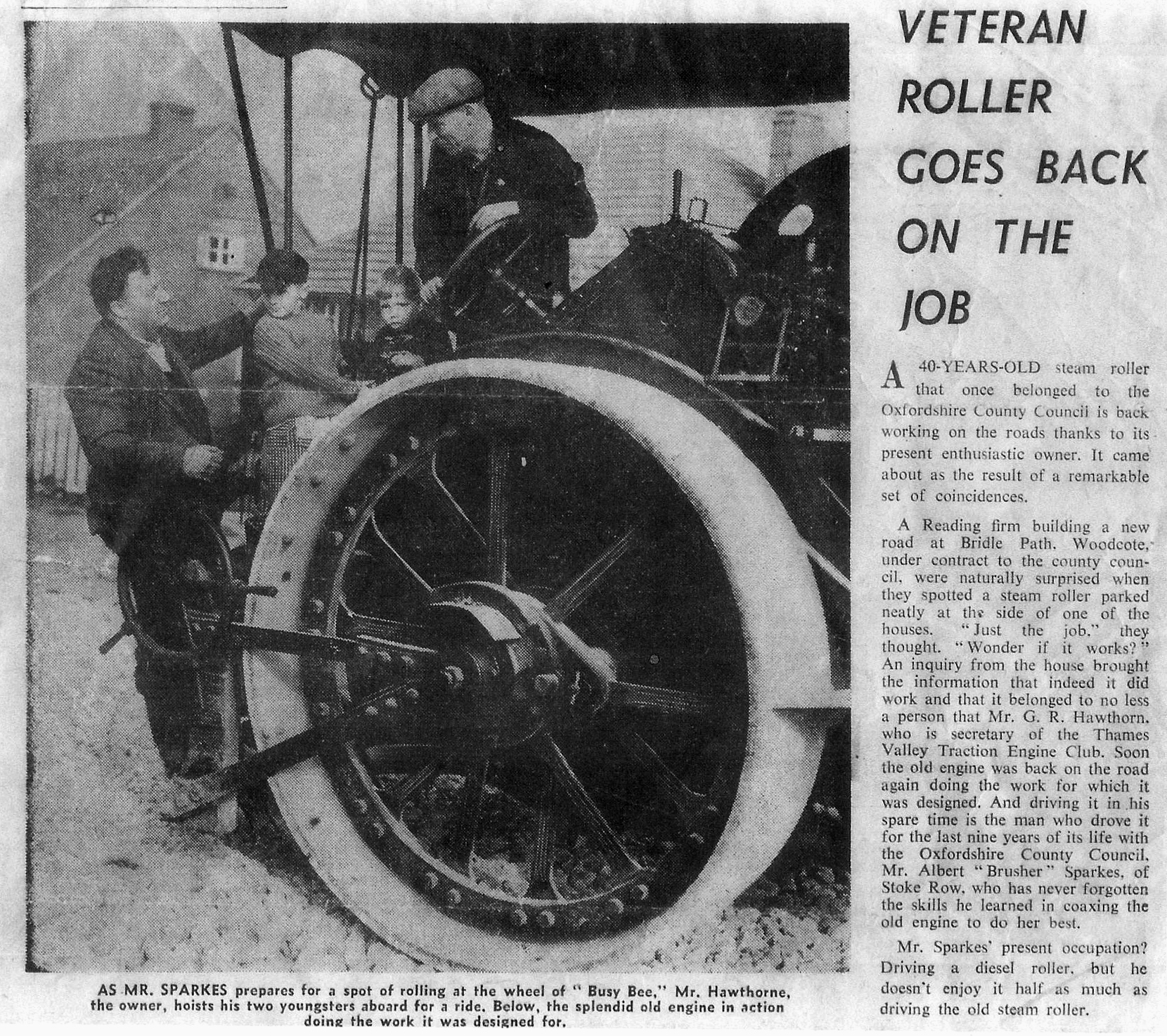
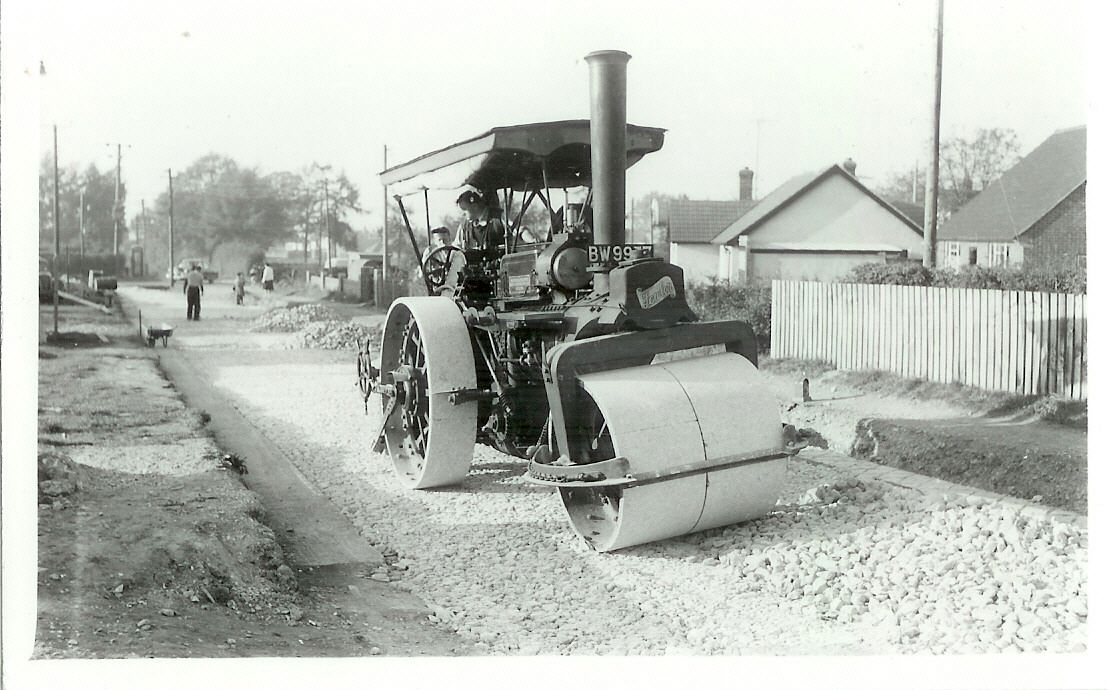
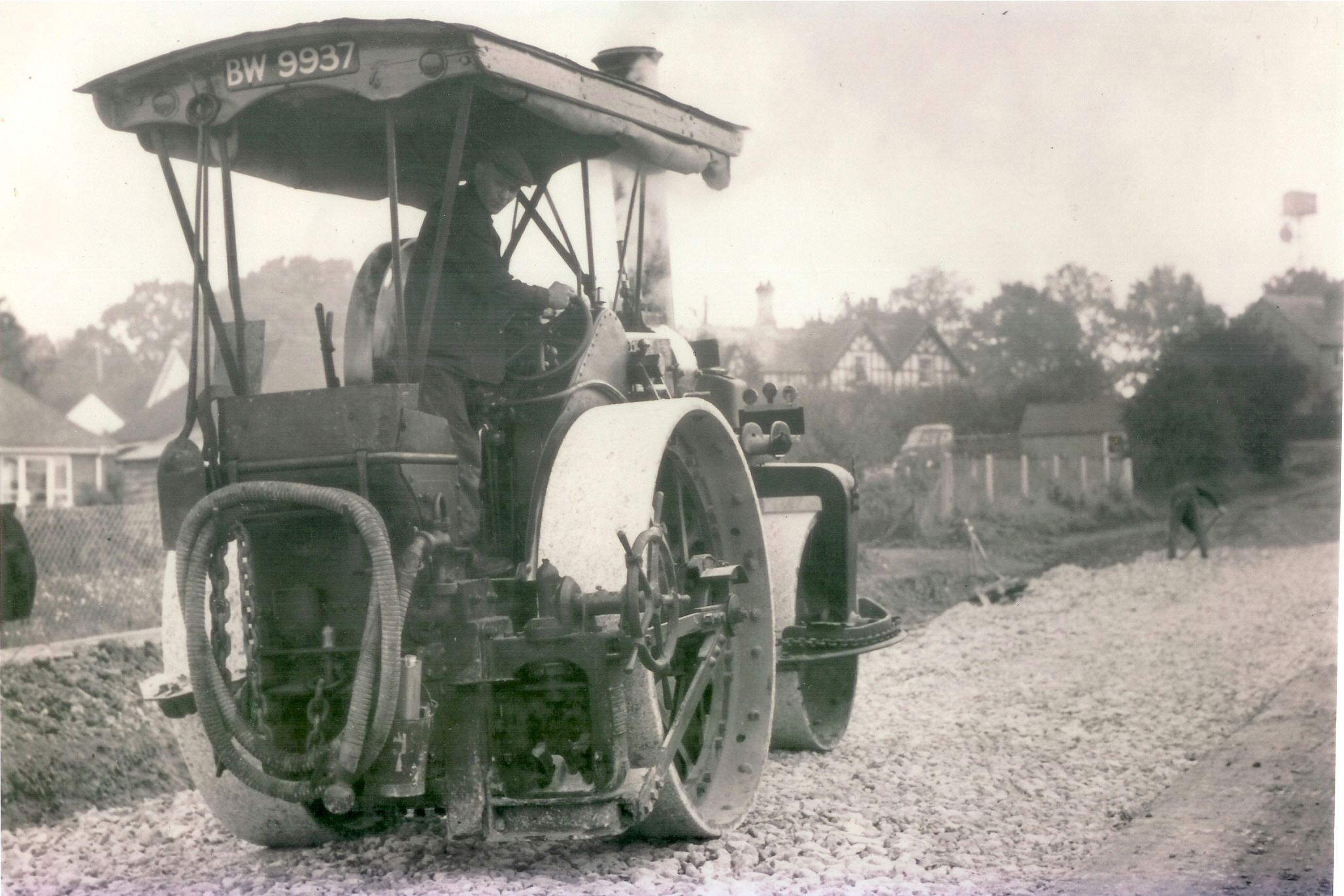
Trevor Smallbone reports that it was 50 years ago last October, that Ran Hawthorne used his Fowler roller “Busy Bee” to roll in the Bridle Path in Woodcote, as before it was no more than a gravel track.

Fowler Busy Bee rolling The Bridle Path Woodcote 20th October 1962 - click to enlarge

Fowler Busy Bee rolling The Bridle Path Woodcote 20th October 1962 – click to enlarge

In the article, it’s nice to see is the little lad on the footplate next  to Brusher Sparks  is our Membership Secretary Richard Hawthorne! Ran is hanging on the back with John Hawthorne standing on the Scarfier.

Busy Bee rolling the Bridle Path. On the left hand side is where Co-Op is now located.

Busy Bee rolling the Bridle Path. On the left hand side is where Co-Op is now located.

Fowler Busy Bee with Brusher Sparks driving

“Brusher” Sparkes at the controls

Posted in Historical preservation | Tagged , , , | 2 Comments

Subscriptions due

Please remember to pay your annual subscriptions if you have not already done so. The membership secretary is after you!

Membership costs £10 per year and is due in January. Members enjoy excellent club evenings on the second Monday of each month and get opportunities to become involved in a great part of Britain’s heritage.

Please email Richard Hawthorne or send your money directly to:
27, Underhill,
Moulsford,
Oxon,
OX10 9JH

Posted in Club meetings, News | Leave a comment

Model progress

Member Andy Smith has sent through some pictures of his latest project: Half size Tasker B2 chain drive tractor. Nice work Andy!

tasker1

tasker3

Posted in News | Tagged , | Leave a comment

Don’t forget the January Meeting

Don’t forget to get down to the Englefield Social Club next Monday (14th) for our January Meeting.

This month’s talk is from member Alan Steevens who’ll be showing some of his collection of traction engine slides.

Sam Love with Wallis and Steevens no. 7248 "Pedler"

Sam Love with Wallis and Steevens no. 7248 “Pedler”

For those of you who don’t know, Alan’s uncle was the late Sam Love. I spec’ ol’ Sam will appear somewhere in the slides you!

Posted in Club meetings | Tagged , | Leave a comment

Help needed

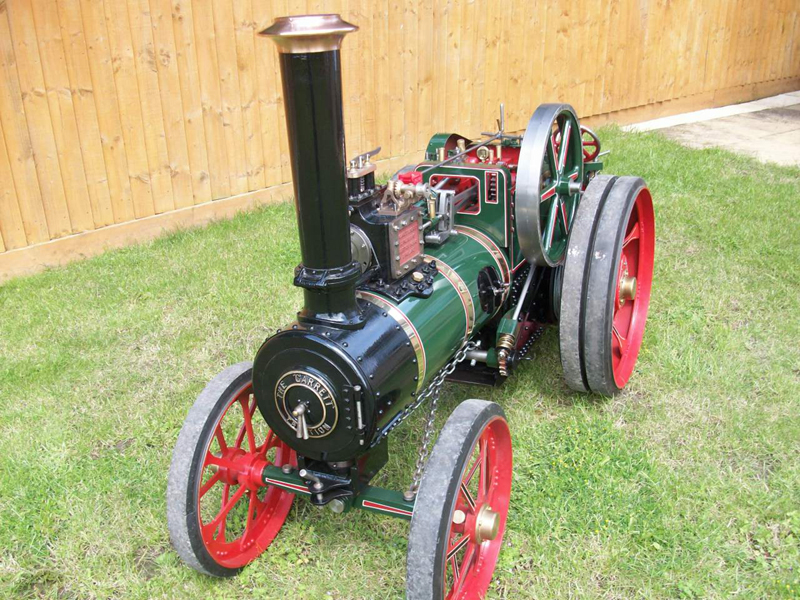
Club member Richard Poole has almost completed a lovely 4″ scale Garrett Traction Engine. In order to finish it off Richard needs the help from a plumber to install all the pipework.

If there are any budding model engineers out there who can help Richard, please leave a comment on this post or email alittleandoften@gmail.com

Richard's nearly complete 4" Garrett General Purpose Engine

Richard’s nearly complete 4″ Garrett General Purpose Engine

Posted in Help, Technical topics | Tagged , , | 2 Comments

Burrell Tractor Winter Repairs

Richard Hawthorne reports on his winter project to repair the throat plate on Burrell Gold Medal Tractor 3626 “Jayne Eyre”

A visit from the boiler inspector is always a worrying time, he had a good look at the little Burrell –  “I am sorry he said – that throat plate is going to require a major repair”.

We soon got started. Belly tanks off, lagging off, gas torch out, let’s start cutting!

To start we blew the rivet heads off with the gas, then ground back the stay heads with an angle grinder. Next the stays were drilled out, and the throat plate cut out. Then the foundation ring rivets were drilled through and the remaining metal washed out with the gas torch. We could then create a cardboard template of the new plate and order a new piece through Goodman’s Steel. After all this it was time for a rest!

The Old Plate

The old throat plate had got very thin!

Once the new plate arrived we ground it to fit, then ground a 30 degree angle on the plate edges for a weld prep. Following this the new stays were machined from some EN3B at a local friendly engineering company. The 3 stays above the repair area also needed replacing so these were fitted in to the outer wrapper before welding started so to not allow distortion when welding. The mud doors were also fitted to ensure the correct shape is maintained. The coded welder has now visited and the plate is all welded in, all that remains is the foundation ring riveting and putting back together.

Stays

Winding in the new stays above the repair

As true to Edwardian tradition a small boy was used for holding up and peining over the stay heads in the awkward positions. Health and safety would have a fit these days, but Tom did a cracking job of the stays, he now has forearms like Popeye!

Young Tom Showing his excellent peining skills

Young Tom Showing his excellent peining skills

Other jobs undertaken this winter are:

  • New phosphor bronze thread in fly wheel brake
  • A new casting made for the hind wheel brake hand wheel as the existing looked like it came from an old lawnmower. New casting courtesy of Paul Turver owner of Burrell Tractor “Gladstone”
  • Water lifter tap handle replaced with correct Shipams handle and blower valve the same.

As I write, snow is on the ground and it seems a long time until spring… but it soon goes. We are well on the way for being ready for the nice weather or should I say rain!

Posted in News, Technical topics | Tagged , , | Leave a comment

Rumour has it…

…That not too far away a rarely seen Aveling Tractor is getting closer to coming back to life.

Aveling tractor

It’s not just a rumour an Aveling Tractor in Stoke Row has had a fire after the boilerwork at Maskell’s in Bedford. Robert Cox reports a trial steaming before re-assembly was carried out in September. Just the small matter of putting all the bits and pieces back in their right places, bit of a jigsaw without a picture!

New back axle is being made along with new bearings, she can then get back on 4 wheels.

Watch this space for more updates.

Posted in News, Technical topics | Tagged , , | 1 Comment

TVTEC Christmas Meeting

Believe it or not, it’s that time again! Don’t forget to turn out next Monday for the Thames Valley Christmas Meeting at Englefield Social Club.

A full buffet will be provided, photo competition, raffle, video’s, photo displays and more!

All are welcome – See you there!

Hungerford Victorian Evening

Steam at Christmas time – Hungerford Victorian Evening

Posted in Club meetings, News | Tagged , | Leave a comment